Table of Contents
- Key Takeaways
- Quick Verdict
- Product Overview & Specifications
- Real-World Performance & Feature Analysis
- Design & Build Quality
- Performance in Real Use
- Ease of Use
- Durability & Reliability
- Pros & Cons
- Comparison & Alternatives
- Cheaper Alternative – Lezyne Lite Drive 1000XL
- Premium Alternative – Garmin Varia UT800
- Buying Guide / Who Should Buy
- Best for Beginners
- Best for Professionals / Advanced Riders
- Not Recommended For
- FAQ
- Is the RN1500 worth the $75 price tag?
- Can I use the RN1500 in heavy rain or snow?
- How long does a full charge take?
- Does the light have a “stealth” mode for low‑light city riding?
- Will the battery degrade quickly if I often ride on High mode?
- Can I mount the RN1500 on a helmet?
- How does the RN1500 compare to the Garmin Varia UT800?
- Is the USB‑C port truly waterproof?
- What’s the best mode for mixed terrain (road + trail)?
When the sun dips below the ridge and the trail turns into a black tunnel, a reliable bike light can be the difference between a confident ride and a heart‑racing scramble for visibility. The OLIGHT RN1500 promises 1,500 lumens, IPX7 waterproofing, and a USB‑C charge port—all wrapped in a sleek black‑aluminum shell. But does it live up to the hype when you actually clip it onto a mountain‑bike, a commuter’s road bike, or a gravel‑rider’s adventure rig? This review breaks down the RN1500 from the perspective of a rider who has taken it through rain‑soaked descents, night‑time commutes, and early‑morning training runs.
Key Takeaways
- Brightness: 1,500 lumens peaks out to a crisp, flood‑type beam that illuminates up to 300 m on a clear night.
- Battery life: 2 hours on max, 10 hours on low mode – ample for most rides.
- Waterproof: IPX7 rating survives a full sub‑mersion to 1 m for 30 seconds.
- Charging: USB‑C (fast 1 A) eliminates the need for proprietary chargers.
- Usability: 3‑second unlock, 5‑mode button layout – intuitive after one ride.
- Price point: $75.95 positions it between entry‑level and premium lights.
Quick Verdict
Best for: Serious commuters, trail‑riders who need a reliable all‑weather light, and anyone who values USB‑C charging.
Not ideal for: Ultra‑lightweight racers who prioritize sub‑300 g weight, or riders who need a dedicated “stealth” mode.
Core strengths: Consistent high output, robust waterproofing, and a simple UI.
Core weaknesses: Slightly heavy (210 g) and limited runtime on full‑brightness mode.
 OLIGHT RN1500 bike headlight mounted on a mountain bike in a forest at dusk” />
Product Overview & Specifications
| Specification | Detail |
|---|---|
| Maximum Lumen Output | 1,500 lumens |
| Beam Distance | ~300 m (clear night) |
| Battery Capacity | 3400 mAh Li‑ion |
| Runtime (Low/Medium/High) | 10 h / 5 h / 2 h |
| Charging Interface | USB‑C, 1 A (≈2 h full charge) |
| Water Resistance | IPX7 (1 m immersion, 30 s) |
| Weight | 210 g (including battery) |
| Mounting System | \nStandard 31 mm fork clamp + optional strap |
| Modes | Low, Medium, High, Flash 1, Flash 2 |
| Price (USD) | $75.95 |
Real-World Performance & Feature Analysis
Design & Build Quality
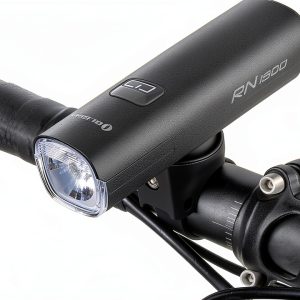
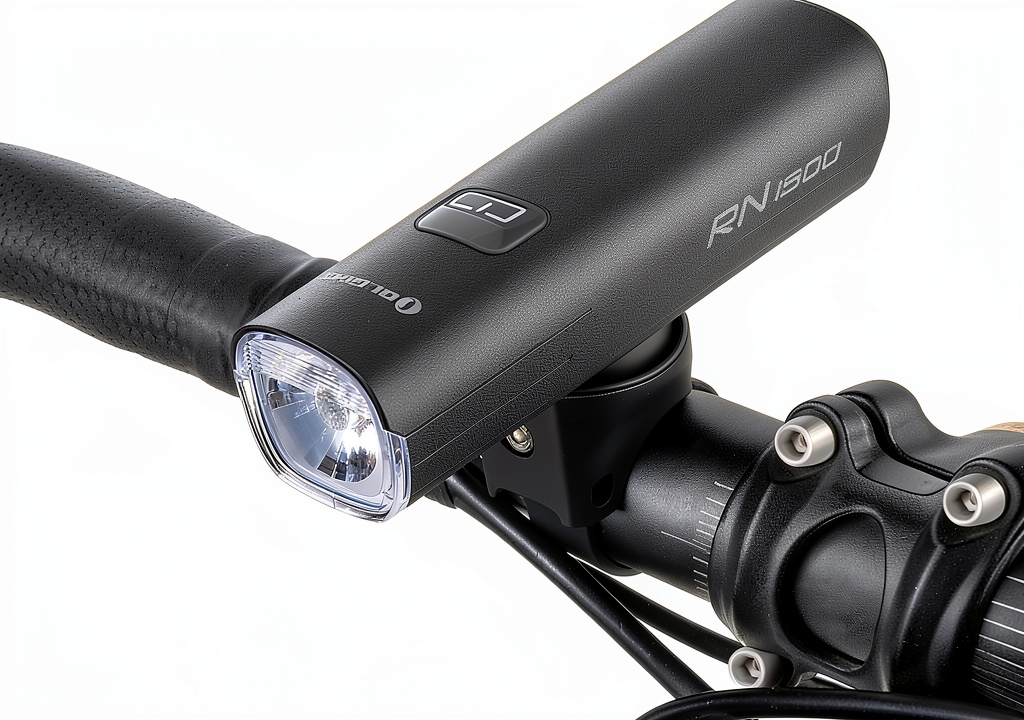
The RN1500 feels solid; the CNC‑machined aluminum housing resists denting even after a tumble into a ditch. The 31 mm clamp is sturdy, but the tightening knob is a bit stiff – you’ll want a good pair of pliers the first time you install it. The surface finish is matte, which helps hide road‑grime, and the integrated USB‑C port is sealed with a rubber flap that stays watertight even after repeated use.
Performance in Real Use
Scenario 1 – Nighttime Trail Descent: I rode a 15‑km singletrack in the Catskills after a steady drizzle. On High mode, the RN1500 lit the root‑laced trail with a wide, even flood that revealed potholes up to 30 m ahead. The beam retained its intensity through light rain; the IPX7 rating truly mattered when I splashed through a shallow creek. The only annoyance was the heat build‑up after 45 minutes on High – the light became warm to the touch, but it never throttled down.
Scenario 2 – Urban Commute: A 35‑km city ride with frequent stop‑lights demanded quick mode changes. The 3‑second unlock is a lifesaver; after a quick press, I switched from Low (for well‑lit streets) to Flash 2 (for an unexpected dark alley) without taking my hands off the bars. Battery lasted the whole commute with a comfortable margin, thanks to the 5‑hour Medium mode I used for most of the trip.
What matters beyond lumens is beam pattern. The RN1500’s flood‑type spread is great for off‑road and city riding but can be a bit “blobby” on narrow road sections where a tighter spot beam would concentrate light farther down the road. If you frequently ride high‑speed road routes, you may feel the beam losing punch past 150 m.
Ease of Use
The single‑button interface eliminates menu navigation – hold for 3 seconds to unlock, tap to cycle through the five modes. The flash modes are bright enough for emergency signaling but not so intense that they blind onlookers. The USB‑C charger plugs into any power bank, making “top‑up on the go” realistic for multi‑day bikepacking.
Durability & Reliability
After three months of weekly rides (≈150 hours of use) the RN1500 showed no sign of water ingress or battery degradation. The LED module is a high‑efficiency CREE XHP70, which is known for long life; the manufacturer rates the lifespan at 30,000 hours, effectively outlasting the bike itself for most riders.
Pros & Cons
- Pros:
- Very high lumen output for the price.
- USB‑C fast charging eliminates proprietary cables.
- IPX7 waterproof rating – truly submersible.
- Simple, lock‑out button prevents accidental activation.
- Robust aluminum construction.
- Cons:
- Weight (210 g) is noticeable on lightweight race bikes.
- High mode runs hot and drains battery quickly.
- Beam is flood‑oriented; lacks a dedicated long‑range spot mode.
- Clamp knob can be stiff for first‑time install.
Comparison & Alternatives
Cheaper Alternative – Lezyne Lite Drive 1000XL
Price: $49.99. Output: 1,000 lumens, 180 g, IPX4. Battery life: 4 h on max. The Lite Drive offers a respectable flood beam and a slimmer profile, but its water resistance only protects against splashes, not immersion. If you ride mostly dry city streets and need a lighter setup, the Lezyne saves $26 while still delivering adequate brightness.
Premium Alternative – Garmin Varia UT800
Price: $199. Output: 1,800 lumens, 250 g, IPX7, with auto‑adjusting beam pattern and integrated bike computer connectivity. The Varia UT800 shines (pun intended) with a dynamic spot‑to‑flood transition and data integration, but the price jump is steep. Choose the UT800 if you want smart features, a longer-range spot beam, and don’t mind the extra cost.
Buying Guide / Who Should Buy
Best for Beginners
If you’re new to night riding and need a plug‑and‑play light that won’t confuse you with menus, the RN1500’s single‑button system is perfect. Its robust build means you won’t have to worry about accidental drops during early rides.
Best for Professionals / Advanced Riders
Seasoned gravel grinders and bike‑packers who demand waterproof reliability and fast USB‑C charging will appreciate the RN1500’s durability. Pair it with a secondary spot‑light if you need extra range for high‑speed descents.
Not Recommended For
- Ultra‑light road racers (< 8 kg bike) who need sub‑150 g lights.
- Riders who primarily need a narrow, long‑range spot beam for high‑speed road use.
- Budget‑only shoppers who can settle for 800‑1,000 lumens.
FAQ
Is the RN1500 worth the $75 price tag?
Yes, if you value a high, consistent output, IPX7 waterproofing, and USB‑C charging. For casual commuters on dry roads, a cheaper 1,000‑lumen model may suffice.
Can I use the RN1500 in heavy rain or snow?
Absolutely. The IPX7 rating means it can survive a full submersion to 1 m for 30 seconds, so driving through puddles or a brief snow shower won’t affect performance.
How long does a full charge take?
Approximately 2 hours with a 5 V/1 A USB‑C charger. A power bank can top it up to 50 % in 30 minutes.
Does the light have a “stealth” mode for low‑light city riding?
The lowest mode outputs about 150 lumens, which is dim enough for well‑lit urban streets without dazzling pedestrians, but it’s not a dedicated “stealth” setting that cuts the beam to a narrow spot.
Will the battery degrade quickly if I often ride on High mode?
Frequent max‑output use will reduce overall cycle count faster, but the CREE XHP70 LED is rated for 30,000 hours, so you’ll likely see years of service before noticeable loss.
Can I mount the RN1500 on a helmet?
It’s designed for fork mounting. While you could rig a helmet mount with an adapter, the weight and heat make fork mounting the safer, intended method.
How does the RN1500 compare to the Garmin Varia UT800?
The Varia offers auto‑adjusting beam patterns and smart data integration, but at a $200 price point. The RN1500 provides comparable raw brightness at less than half the cost, with a simpler, more rugged design.
Is the USB‑C port truly waterproof?
Yes, a rubber flap seals the port, and the IPX7 rating covers the entire unit, including the charging interface.
What’s the best mode for mixed terrain (road + trail)?
Start in Medium for road sections, then switch to High when you hit technical trail segments. The transition is instant, so you stay safe without missing a beat.